When Your Buildings Start Managing You: FCA’s Can Make Your Life Easier
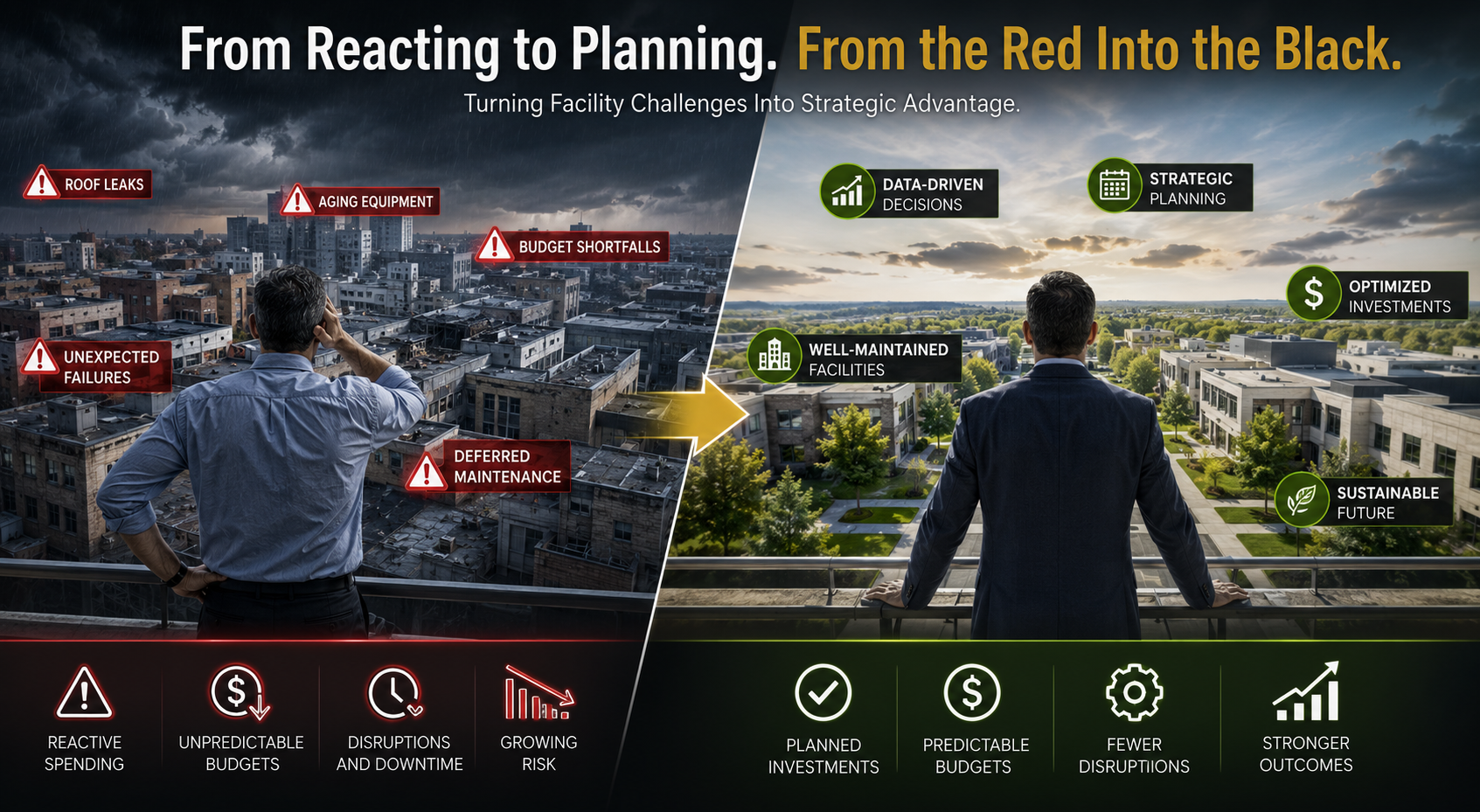
How Facility Condition Assessments Turn Uncertainty into Strategy
Discussion on the importance of maintenance management and tools to do so.
How Facility Condition Assessments Turn Uncertainty into Strategy
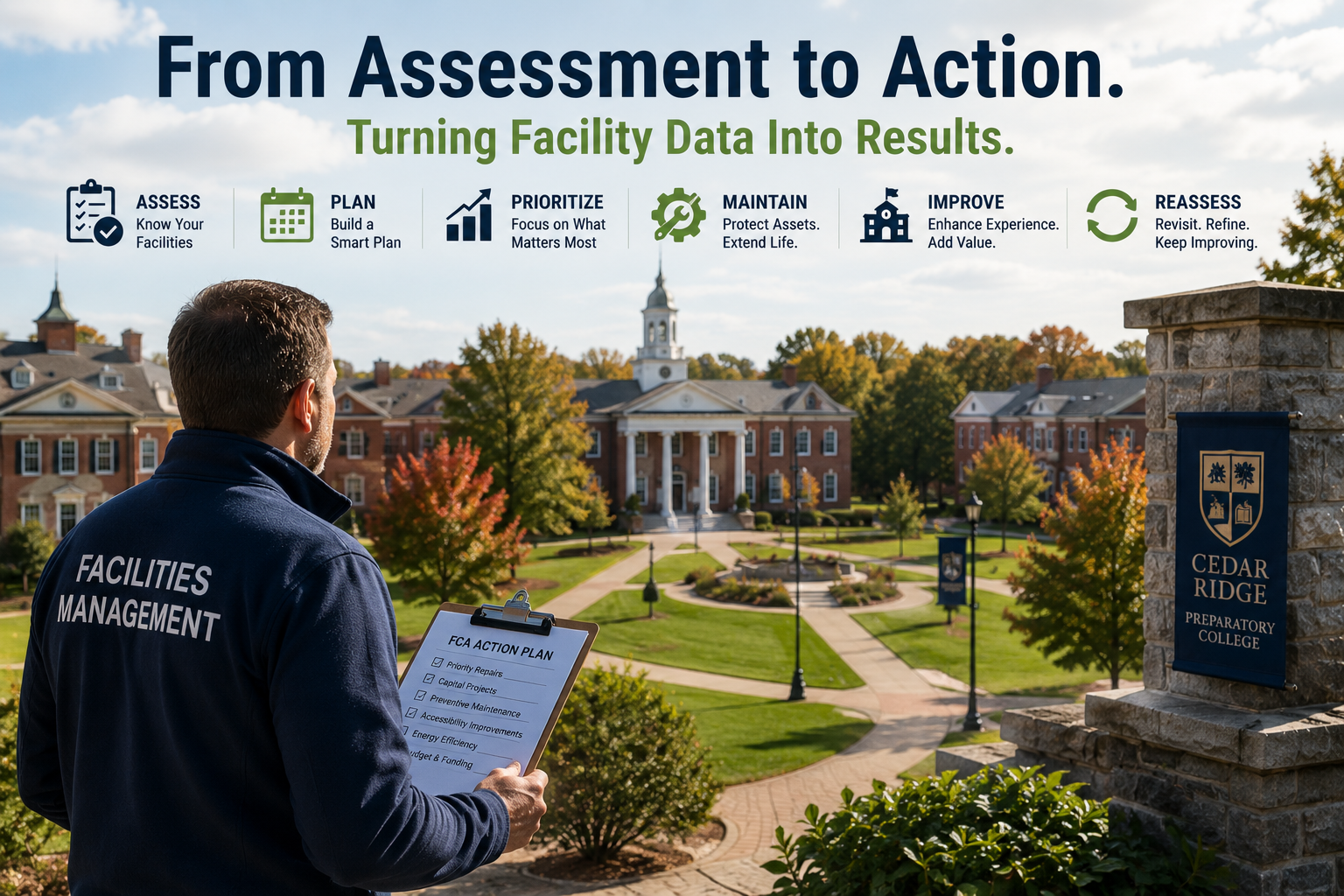
How to Turn Your Facility Condition Assessment Into Better Buildings, Better Planning, and Better Financial Outcomes A Facility Condition Assessment (FCA) represents one of the most valuable investments … Read more
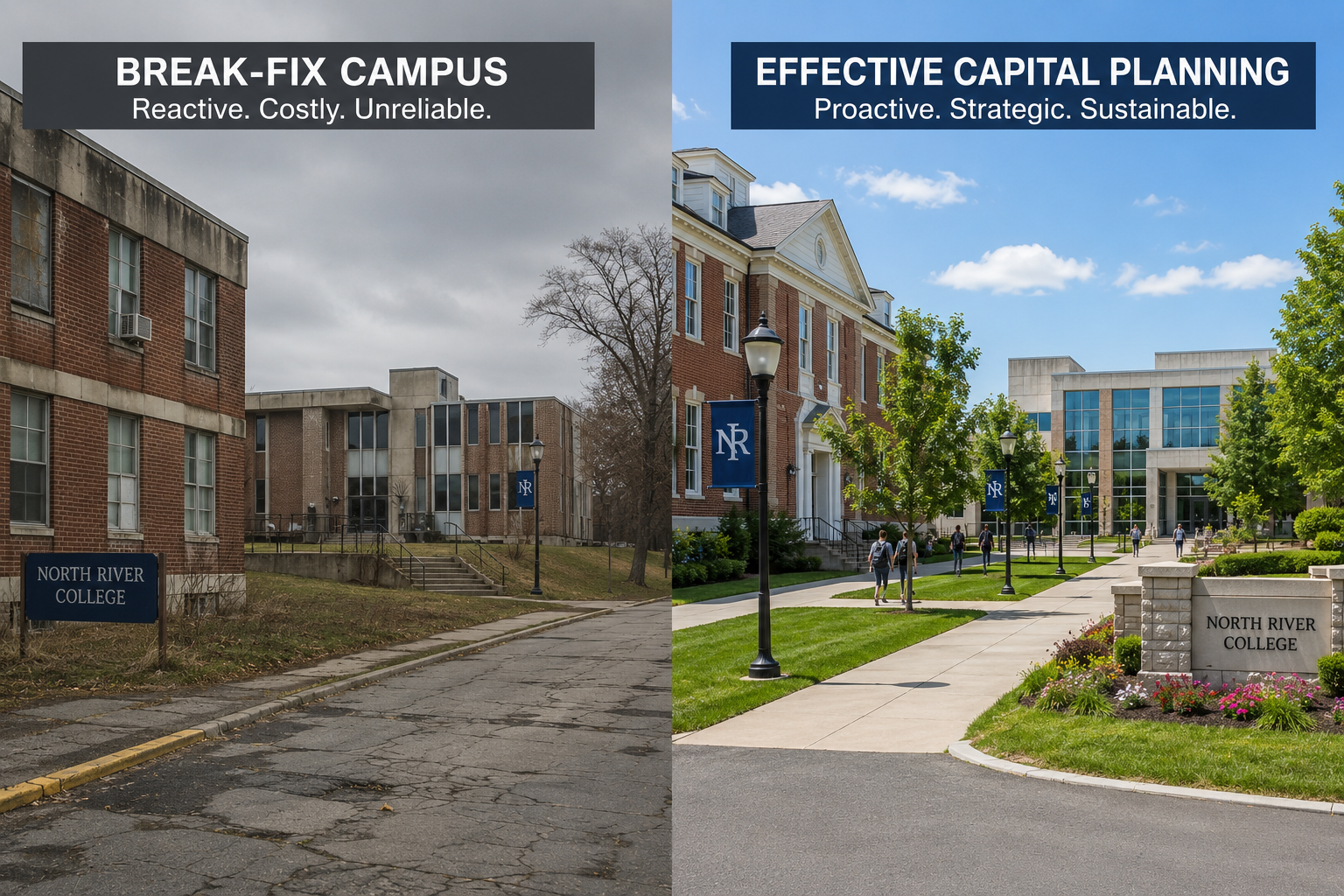
How Strategic Facility Condition Assessments and Capital Planning Protect Institutional Assets, Reputation, and Long-Term Financial Stability For many small colleges, community colleges, and private or preparatory schools, facilities … Read more
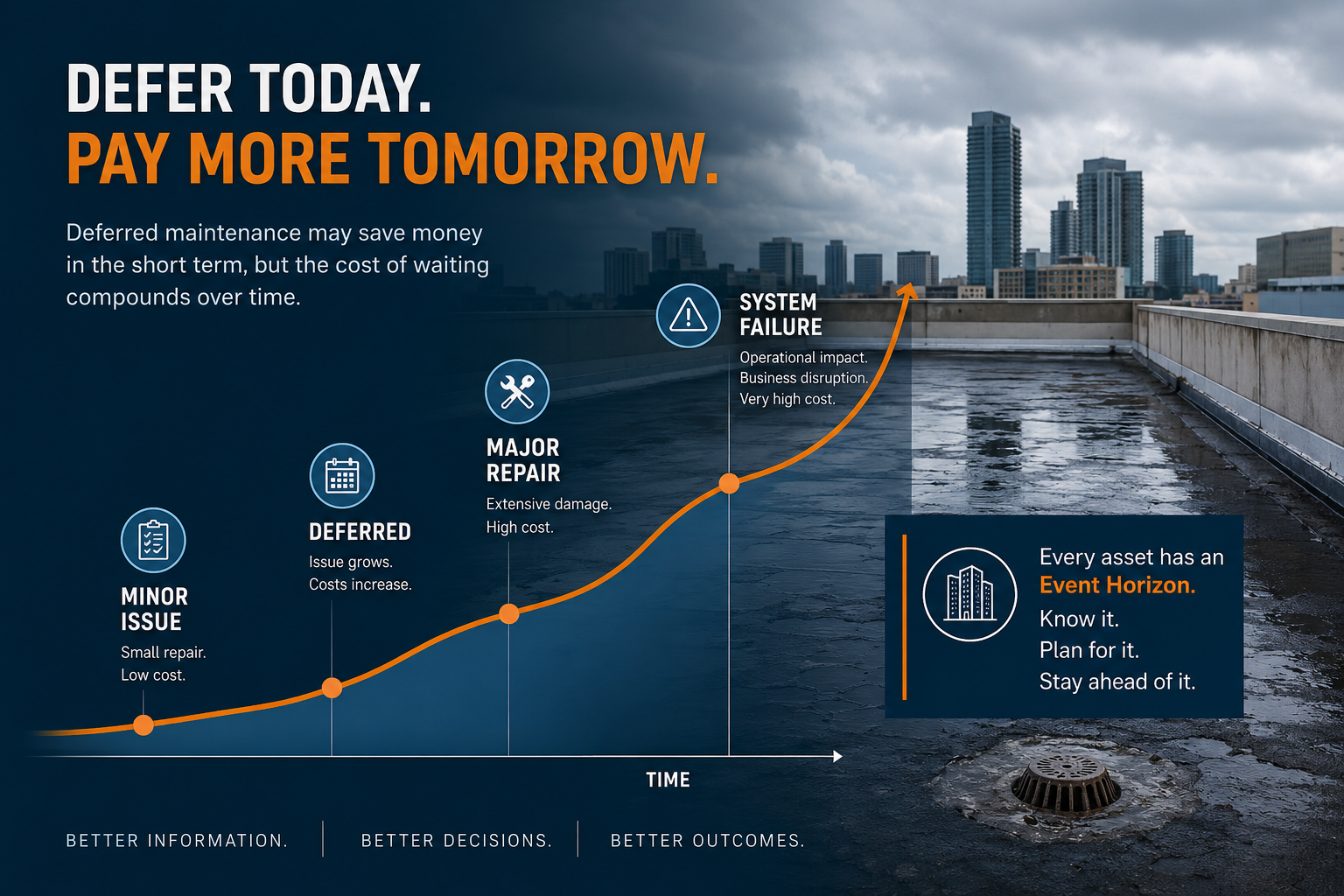
Deferred maintenance is more than a facilities issue, it is a financial decision with compounding operational and capital consequences. From roofing failures to aging HVAC systems, delaying critical work without a strategy can quietly transform manageable repairs into expensive emergencies. This article explores how organizations can better understand the true cost of waiting and make smarter, data-driven capital planning decisions.
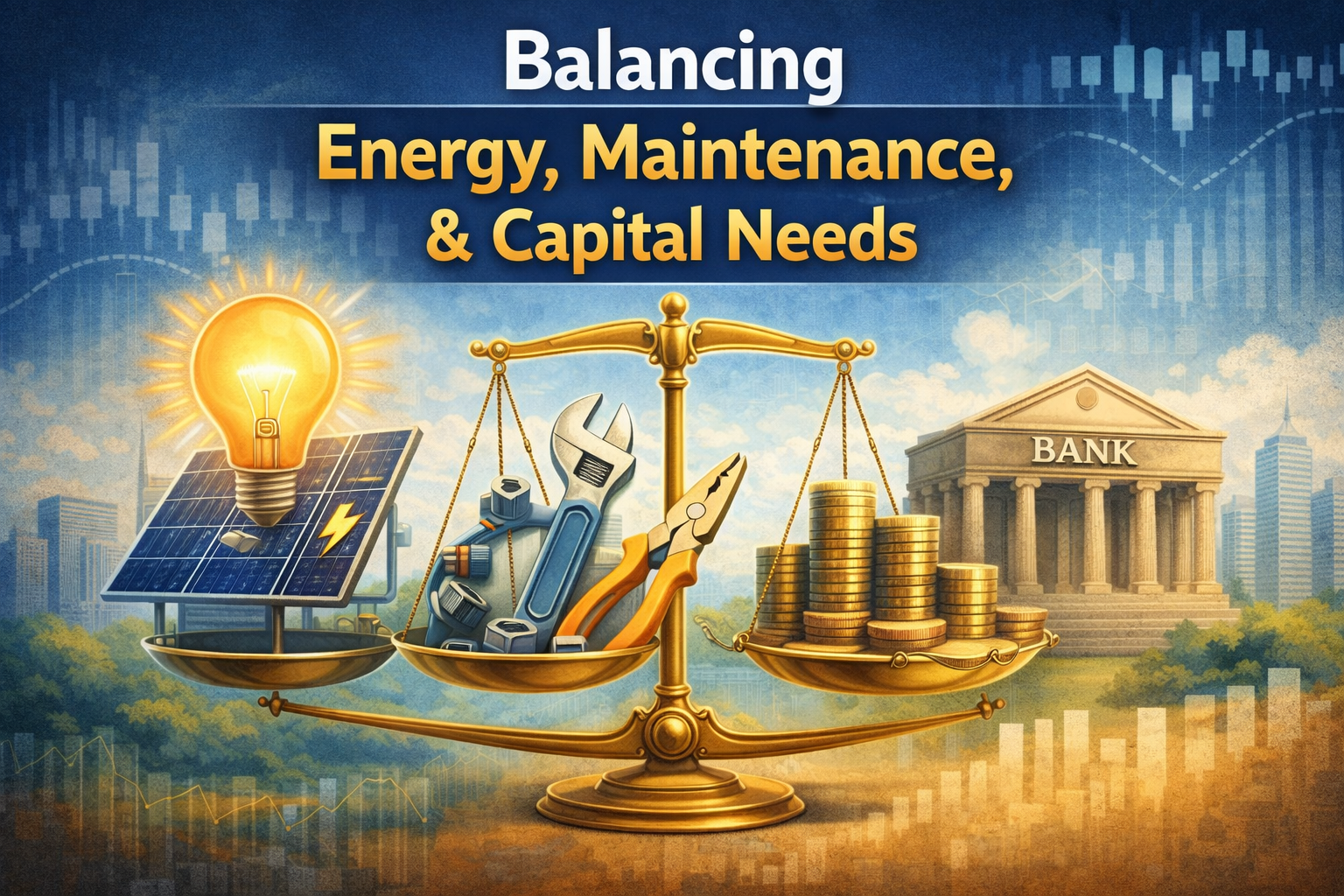
For many small and mid-sized colleges, financial pressure is a constant reality. Leadership teams focus heavily on tuition revenue, enrollment trends, and capital budgets—but often overlook a critical area of financial leakage:
The connection between energy consumption, maintenance burden, and deferred capital renewal.
These three factors are deeply interrelated. When one is neglected, the others are impacted—often in ways that are difficult to see in standard financial reporting.
This paper explores how aging equipment, deferred maintenance, and inefficient systems quietly increase operating costs year after year—and how institutions can regain control through data-driven planning.
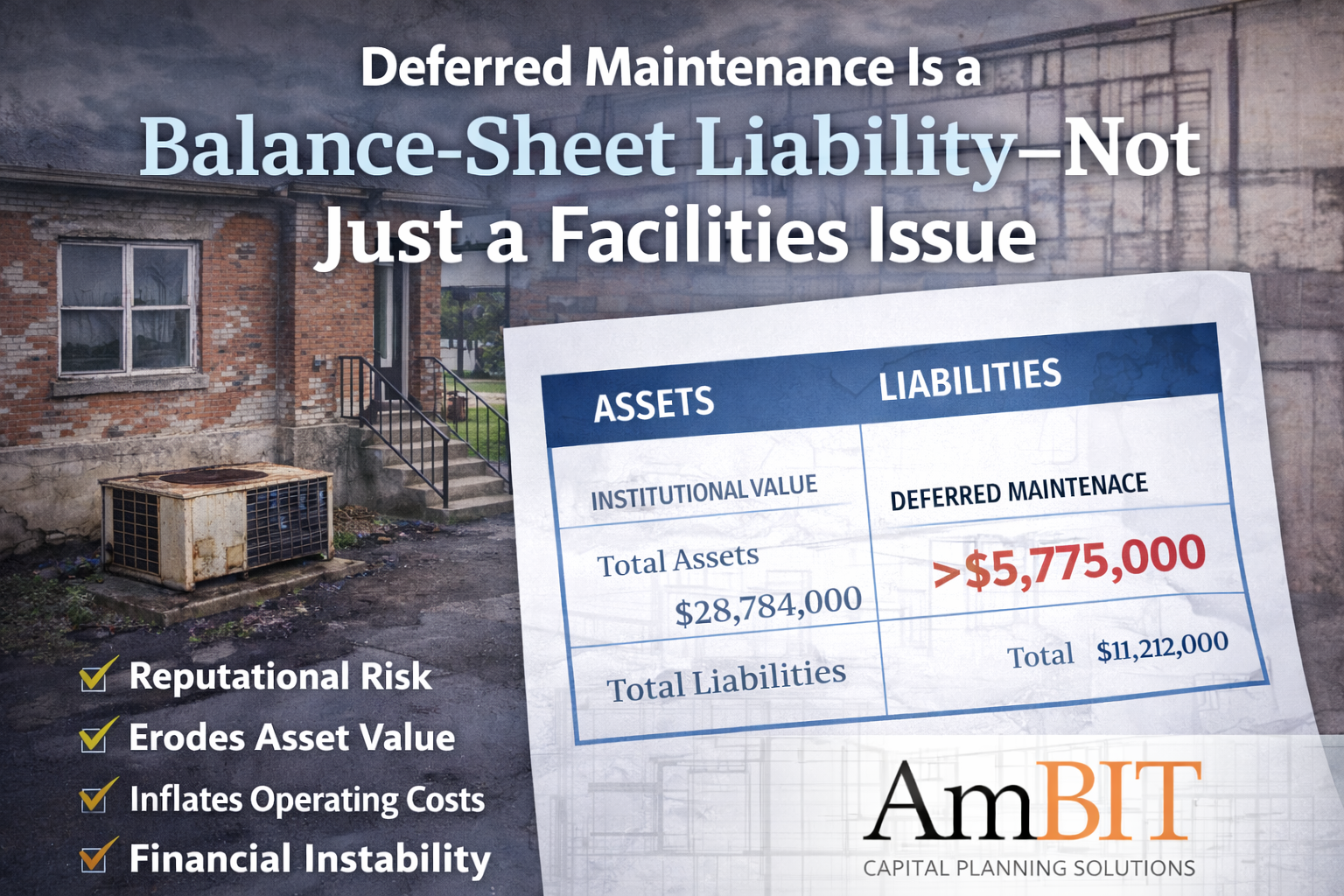
Deferred maintenance is often discussed as an operational challenge.
But in reality, it’s a financial one.
When renewal projects are postponed year after year, the impact doesn’t stay in the boiler room or on the roof. It migrates quietly onto the balance sheet.