Deferred maintenance sounds harmless. Until it isn’t.
A delayed roof repair. An HVAC unit pushed through one more season. A leaking pipe patched again instead of being replaced. On paper, these decisions can look practical — even responsible. Budgets are tight. Priorities compete. Cash flow matters. No organization can fund every need the moment it appears.
So work gets delayed.
That is normal.
But deferred maintenance is not just a facilities issue. It is a financial decision. And like every financial decision, it carries consequences.
The real question is not simply, Can we wait?
The better question is: What is the cost of waiting?
Deferred Maintenance Is Not Free
At its core, deferred maintenance is simple. It is work that should be completed but is not. Usually, it is delayed because of limited funding, competing priorities, staffing constraints, or the belief that the issue is not yet urgent.
Every organization deals with it. Schools. Municipalities. Hospitals. Universities. Commercial real estate portfolios. Private owners.
The issue is not whether deferred maintenance exists. It always will.
The real issue is whether it is being managed intentionally.
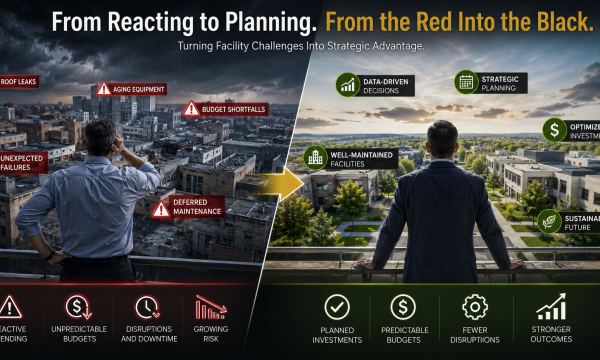
There is a major difference between strategically deferring work and simply kicking the can down the road. One is a plan. The other is a gamble.
The Short-Term Savings Are Real — But So Are the Long-Term Costs
Sometimes delaying work is the right decision.
A repair or replacement may need to wait because preserving cash flow, protecting operations, or funding a higher-priority initiative matters more in the short term. Not every aging asset requires immediate replacement. Capital planning is about prioritization.
But prioritization without context creates risk.
Without a clear understanding of cost escalation, operational impact, and asset condition, deferred maintenance can feel like savings when it is really just a larger expense pushed further into the future.
In today’s market, where labor, materials, energy, and insurance costs continue to rise, waiting can become the most expensive decision an organization makes.
The question is not whether something can wait.
The question is whether leadership understands what waiting will cost.
Small Problems Become Capital Events
A roof issue is one of the clearest examples.
What begins as a manageable repair — a flashing issue, membrane failure, or clogged drain — may initially be inexpensive to address. But when deferred too long, water intrusion spreads. Insulation becomes saturated. Interior finishes are damaged. Electrical systems are impacted. Mold becomes a concern. Operations are disrupted.
At that point, the issue is no longer a simple roof repair.
It becomes a building event.
The same pattern appears with HVAC systems. A unit with declining performance may survive another season, but the risk changes over time. Energy costs increase. Comfort complaints rise. Emergency repairs become more frequent. Parts become harder to source. Facilities staff spend more time reacting instead of planning.
Then the system fails at the worst possible time.
That is how deferred replacements become emergency capital projects — and emergencies almost always cost more.
Facilities See Risk. Finance Sees Timing.
This is where the disconnect often appears.
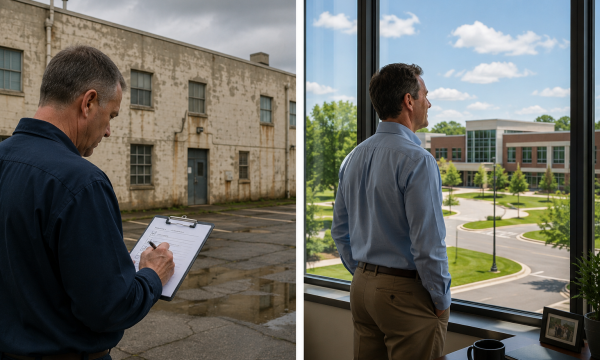
Facilities teams understand how buildings age. They see operational vulnerabilities before they show up in the budget. They understand which systems are limping along and which failures are becoming more likely.
Finance teams see a different reality. They manage timing, reserves, debt, competing priorities, and long-term financial stability.
Both perspectives are correct.
The challenge is that they are often speaking different languages.
Facilities may say:
“This system is failing.”
Finance may ask:
“Can it wait?”
Facilities focus on operational risk. Finance focuses on financial risk. Organizations need both perspectives working together.
That translation layer matters.
At AmBIT, this is where we focus — translating engineering and facility condition data into financial clarity so leadership teams can make informed capital decisions.
Data Alone Does Not Create Strategy
A list of deficiencies is not a capital plan. A spreadsheet of repairs is not a strategy.
Facility assessments are valuable because they identify what is aging, what is failing, and what requires attention. But the real value comes from interpretation.
What matters most?
What can wait?
What should not wait?
What happens if work is delayed another year?
What is the escalation cost?
What creates operational risk versus financial risk?
Facility managers already understand the buildings. Finance leaders need visibility into timing, risk, and cost in a format they can use to make decisions.
That is the difference between information and action.
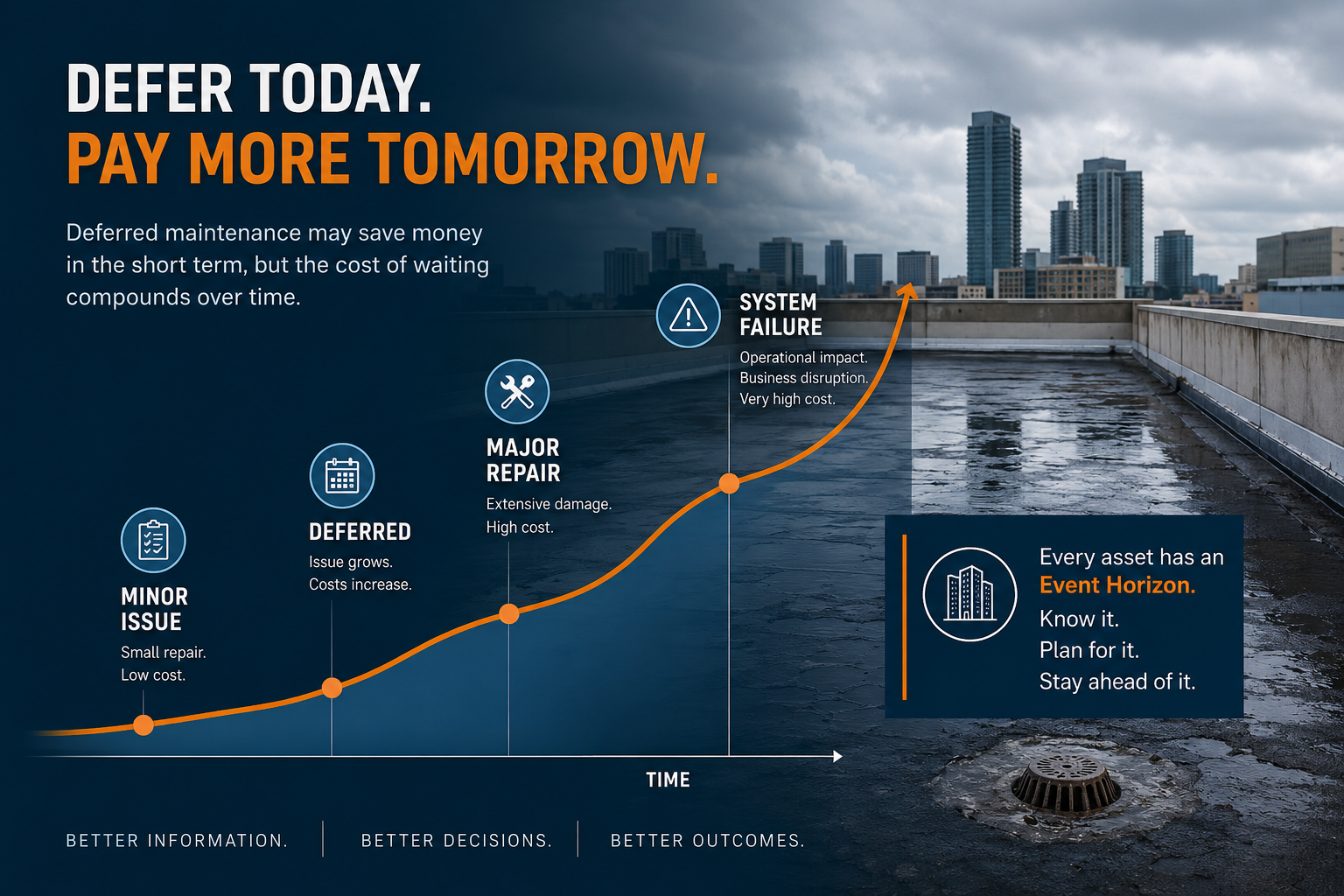
Every Asset Has an Event Horizon
Every building system eventually reaches a point where delay changes the equation.
A manageable issue becomes a major issue. The cost curve bends upward. Flexibility disappears.
That point is the Event Horizon.
Before that point, organizations still have options:
- Repair
- Replace
- Phase projects strategically
- Bundle work together
- Budget proactively
- Finance improvements thoughtfully
After that point, the building begins making the decision for you.
Good asset management helps organizations identify the Event Horizon before they cross it. That does not mean everything gets funded immediately. It means leadership understands the consequences of waiting and prioritizes accordingly.
Deferred maintenance is not always bad.
Blind deferred maintenance is.
The Better Question
Organizations should stop asking:
“Can we defer this?”
And start asking:
“What happens if we do?”
That shift changes the conversation entirely.
It moves deferred maintenance from opinion to analysis. It helps facilities teams explain risk in financial terms. It helps finance teams understand why some projects can wait — and why others cannot.
Most importantly, it transforms a maintenance backlog into a capital strategy.
Deferred Maintenance Is Still a Decision
Ignoring a problem is still a decision. Patching the same issue year after year is still a decision. Extending a system beyond its useful life is still a decision.
The problem is not always the decision itself.
The problem is making that decision without understanding the price.
Organizations need a bridge between operations and finance. They need clarity around condition, timing, risk, and capital exposure before small issues quietly become expensive ones.
At AmBIT, we help organizations connect those dots — translating facility conditions into actionable financial insight so the right people can make the right decisions at the right time.
Because deferred maintenance is not just about buildings.
It is about operations. It is about capital. It is about understanding when waiting is strategic — and when waiting is simply a more expensive way to pay later.

Written by
AmBIT Author