Why a Facility Condition Assessment Strategic Investment Pays Off
A facility condition assessment strategic investment delivers far more value than a compliance checkbox — it is one of the most powerful management tools available to any organization.
In many industries, Facility Condition Assessments (FCAs), reserve studies, deferred maintenance analyses, and capital planning reports are completed for one simple reason:
Because someone requires them.
A governing board.
A lender.
An accrediting agency.
A state regulator.
An insurance carrier.
A bond underwriter.
Too often, organizations approach these studies as little more than a checkbox exercise — something to complete, submit, and place on a shelf until the next required update.
That mindset misses the true value entirely.
A properly executed Facility Condition Assessment and capital planning process is not merely a compliance document. It is one of the most powerful strategic management tools available to a building owner or institution. When used effectively, it can reduce long-term costs, improve operational reliability, enhance occupant experience, strengthen public image, and support better financial decision-making for years to come.
The organizations that benefit most from these studies are not the ones who “mail it in.” They are the ones who use the process to truly understand their facilities and build a proactive strategy for the future.
Beyond Compliance: Seeing the Bigger Picture
Many organizations begin the FCA process reluctantly.
They know they must complete the study to satisfy an outside requirement, but internally they may view it as:
- An administrative burden
- A consulting expense
- A report that leadership may never read
- Another long list of problems they cannot immediately afford to fix
That perspective is understandable — but incomplete.
Buildings are among the largest assets most organizations will ever own or manage. Yet many institutions operate with surprisingly limited visibility into the actual condition, lifecycle status, and future capital needs of those assets.
Without reliable facility data, organizations often operate reactively:
- Emergency repairs replace planned maintenance
- Capital expenditures become unpredictable
- Deferred maintenance quietly accumulates
- Equipment failures interrupt operations
- Aesthetic deterioration impacts public perception
- Budgets become increasingly difficult to forecast
A comprehensive FCA changes that dynamic.
It transforms uncertainty into actionable information.
The Hidden Cost of Reactive Facilities Management
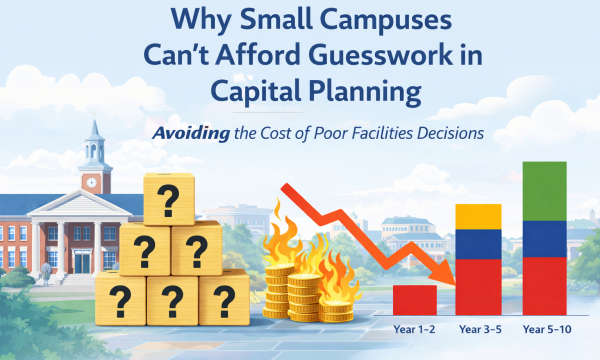
One of the most expensive ways to operate a facility is to wait for systems to fail.
Reactive maintenance often creates a cascading series of problems:
Emergency Premium Costs
Unplanned failures frequently require expedited labor, overtime rates, emergency procurement, and temporary operational workarounds.
Collateral Damage
A failed roof may damage finishes, equipment, technology infrastructure, or occupied spaces. A neglected HVAC system may create humidity problems, indoor air quality concerns, or tenant complaints.
Operational Disruption
Unexpected failures interrupt business continuity. In schools, healthcare facilities, senior living centers, hospitality environments, and public-facing facilities, downtime directly affects users and reputation.
Reduced Equipment Life
Deferred maintenance accelerates deterioration. Systems that could have lasted 25 years may require replacement in 15–18 years due to neglected upkeep.
Budget Volatility
Reactive organizations struggle to forecast capital needs accurately, making budgeting and financial planning far more difficult.
A strategic FCA and capital planning process helps organizations break this cycle by identifying risks early and prioritizing improvements before failures occur.
Turning Data Into Strategy
The greatest value of a Facility Condition Assessment is not simply identifying deficiencies.
It is creating a roadmap.
A well-developed FCA allows organizations to:
- Prioritize capital investments
- Sequence projects intelligently
- Forecast future expenditures
- Coordinate related repairs
- Reduce lifecycle costs
- Allocate resources more effectively
- Align facility investments with organizational goals
For example:
Rather than replacing rooftop units one at a time during emergencies over several years, an organization may discover it can:
- Bundle replacements strategically
- Coordinate roofing and HVAC work simultaneously
- Improve energy efficiency campus-wide
- Reduce mobilization and contractor costs
- Avoid repeated interior disruptions
The result is not simply better maintenance — it is smarter asset management.
Appearance Matters More Than Many Organizations Realize
Facility appearance is often viewed as secondary to operational performance.
In reality, the two are closely connected.
Buildings communicate messages.
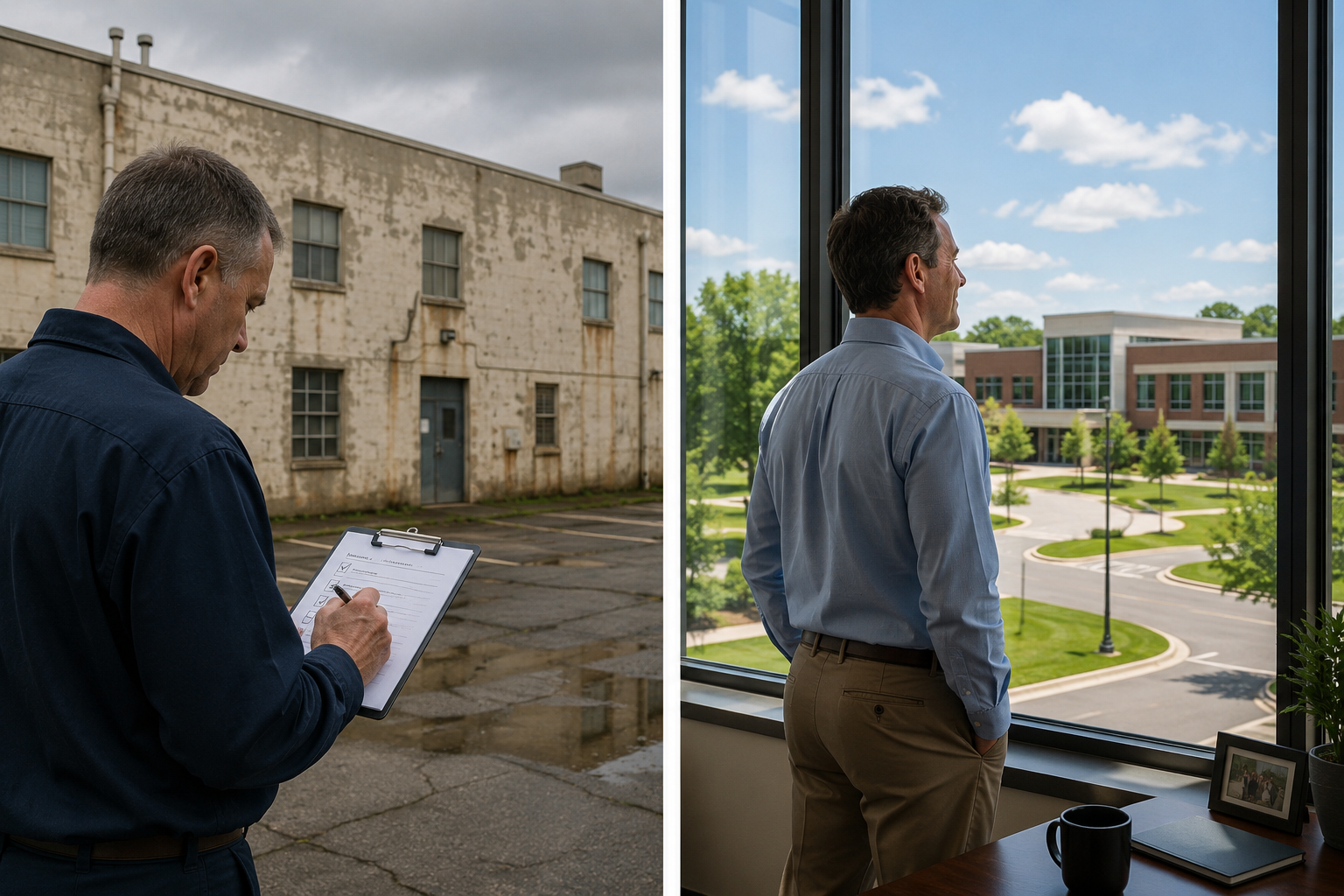
Prospective students evaluating a campus, families touring a senior living facility, customers visiting a retail property, or donors entering an institutional building all form impressions immediately based on the condition of the environment around them.
Deferred maintenance is rarely invisible.
People notice:
- Stained ceiling tiles
- Aging finishes
- Parking lot deterioration
- Poor lighting
- Worn flooring
- Damaged facades
- Outdated restrooms
- Inconsistent maintenance standards
These conditions subtly influence perceptions of professionalism, financial stability, safety, and organizational competence.
An FCA helps organizations identify not only critical infrastructure risks, but also the visible facility conditions that shape public confidence and user experience.
Reliability Is an Operational Advantage
Reliable facilities are often overlooked because, when systems function properly, nobody notices them.
But operational reliability is one of the most important contributors to organizational success.
Reliable buildings support:
- Better occupant comfort
- Fewer interruptions
- Improved employee productivity
- Higher tenant satisfaction
- Better educational environments
- Safer healthcare delivery
- Stronger resident experience
- Improved customer retention
When HVAC systems fail during peak occupancy, elevators repeatedly break down, or plumbing systems create recurring disruptions, facility issues become organizational issues.
A proactive capital planning strategy improves reliability by reducing the likelihood of unexpected failures and allowing organizations to address aging infrastructure methodically rather than reactively.
Capital Planning Creates Financial Stability
One of the most overlooked benefits of capital planning is financial predictability.
Without a long-term capital plan, organizations often experience “surprise spending” that disrupts operating budgets and financial priorities.
A structured capital forecast allows leadership teams to:
- Anticipate future expenditures
- Build reserve funding strategies
- Support financing discussions
- Reduce budget volatility
- Prioritize spending objectively
- Defend capital requests with data
For boards, trustees, and executive leadership, this creates a stronger foundation for governance and fiduciary stewardship.
Rather than reacting emotionally to crises, leadership can make informed, data-driven decisions supported by documented facility conditions and lifecycle analysis.
The Most Valuable FCA Is the One That Gets Used
Not all Facility Condition Assessments deliver the same value.
A report that sits untouched on a shelf provides little benefit regardless of how detailed it may be.
The organizations that gain the greatest return are those that actively integrate facility assessment data into:
- Budget development
- Maintenance planning
- Capital improvement programming
- Strategic planning
- Risk management
- Operational decision-making
The assessment itself is only the beginning.
The real value comes from using the information consistently over time.
A Strategic Mindset Produces Better Facilities
Organizations that approach FCAs strategically tend to experience:
- Lower long-term ownership costs
- More reliable operations
- Better facility appearance
- Improved stakeholder confidence
- Reduced emergency spending
- Better reserve planning
- Stronger long-term asset performance
Most importantly, they gain control over their facilities instead of constantly reacting to them.
That shift — from reactive to proactive — is where the true value lies.
Don’t Just Check the Box
If your organization is investing in a Facility Condition Assessment or capital planning study simply because a regulator, lender, or governing body requires it, you are only capturing a fraction of the potential value.
A well-executed FCA is not just a report.
It is a decision-making tool.
A risk management tool.
A budgeting tool.
An operational planning tool.
A stewardship tool.
Most of all, it is an opportunity.
An opportunity to understand your facilities more clearly, plan more effectively, reduce long-term costs, improve reliability, and create environments that better serve the people who depend on them every day.
The organizations that thrive long-term are rarely the ones who simply “mail it in.”
They are the ones who use information strategically — and act on it proactively.
About AmBIT Asset Capital Solutions
At AmBIT Asset Capital Solutions, we help organizations transform facility data into actionable capital planning strategies. Our services include Facility Condition Assessments, equipment inventory development, deferred maintenance analysis, preventive maintenance planning, and long-range capital forecasting designed to support smarter facility decisions and stronger operational outcomes.

Written by
AmBIT Author