Improving Campus Appearance Without Major Construction

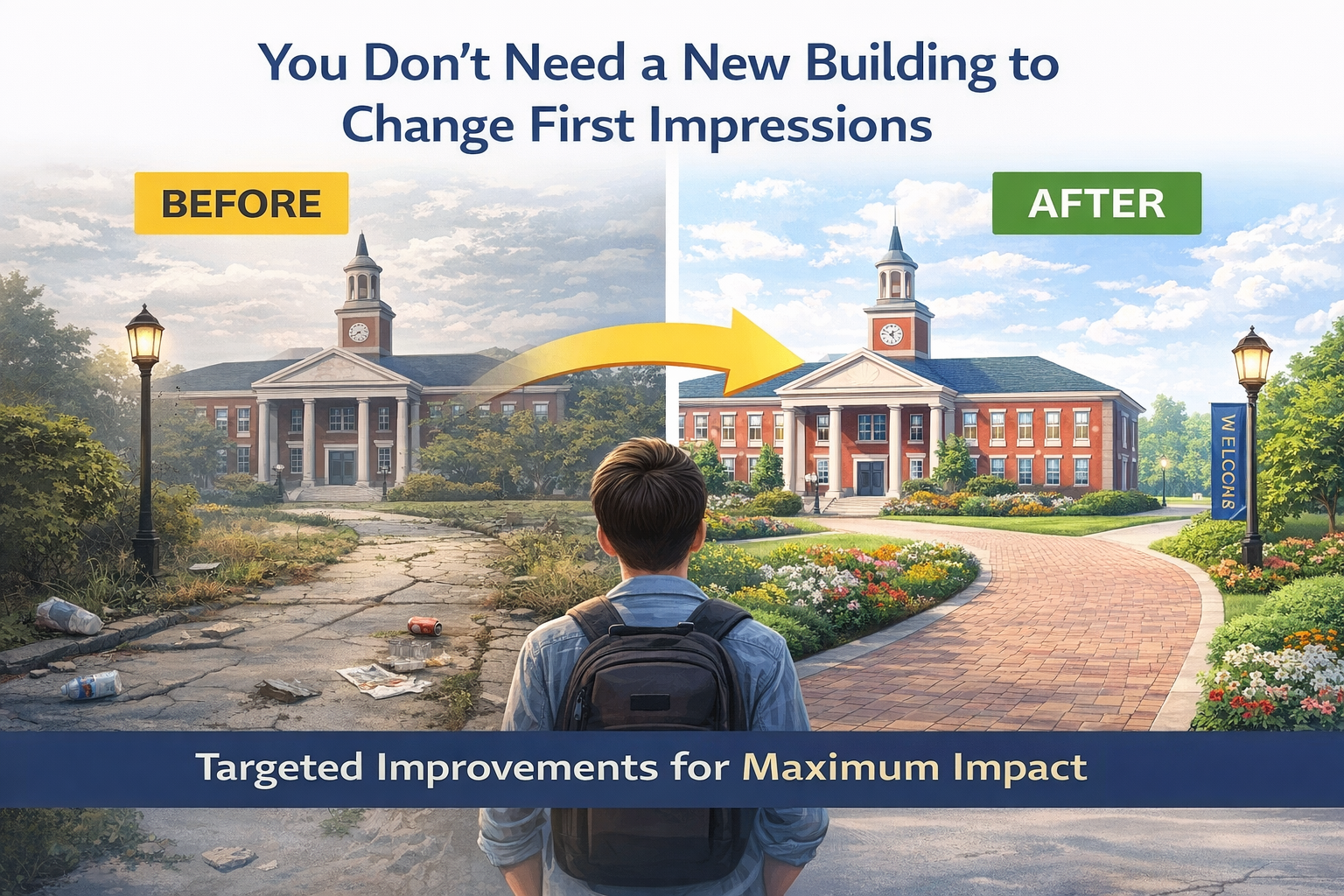
Small and mid-sized colleges face increasing pressure to differentiate themselves in a highly competitive enrollment landscape. While many institutions believe meaningful improvements require large-scale capital projects, the reality is quite different.

First impressions are shaped by what students see—not by how much was spent.

This paper explores how targeted, data-driven investments in high-visibility areas can significantly improve campus perception, support recruitment and retention, and strengthen institutional positioning—without the need for major construction projects.

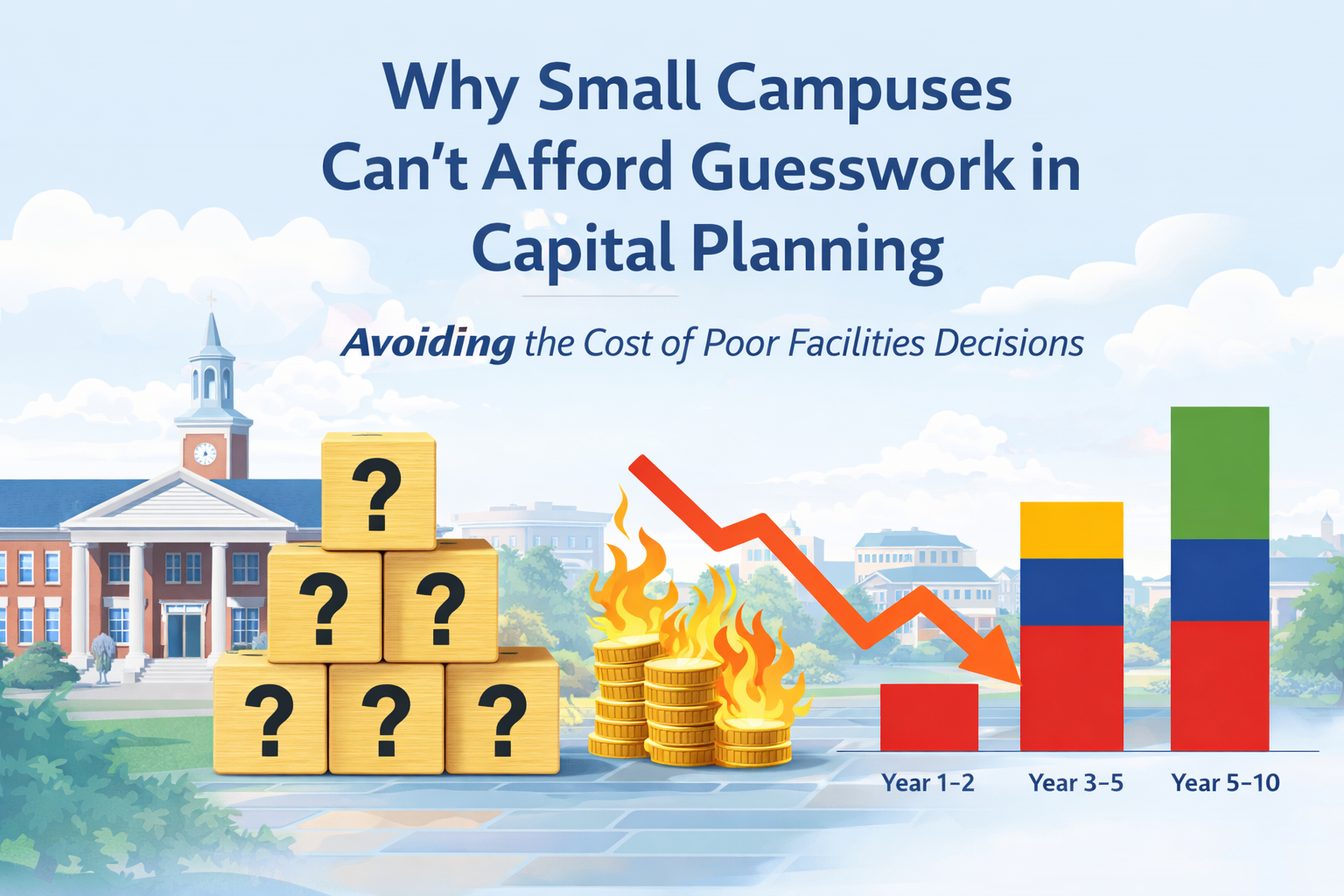
Why Small Campuses Can’t Afford Guesswork in Capital Planning

Small and mid-sized colleges are operating in an increasingly competitive and constrained environment. Enrollment volatility, rising operating costs, and heightened expectations from students and families have made institutional differentiation more critical than ever.

In this context, campus facilities are no longer just operational assets—they are strategic drivers of recruitment, retention, and institutional perception.

Yet many institutions continue to rely on reactive, anecdotal approaches to capital planning—commonly summarized as “fix what fails.” While this approach may appear cost-effective in the short term, it often leads to higher long-term costs, increased operational risk, and diminished competitiveness.

This paper examines the risks of momentum-based decision-making and outlines how risk-priority scoring and system-level forecasting enable smarter, more strategic investment in campus facilities.