Why Retail Chains and Restaurant Operators Can’t Afford to Leave Their Facilities to Chance
Strategic facility planning is the difference between a retail operation that builds customer loyalty and one that quietly erodes it.
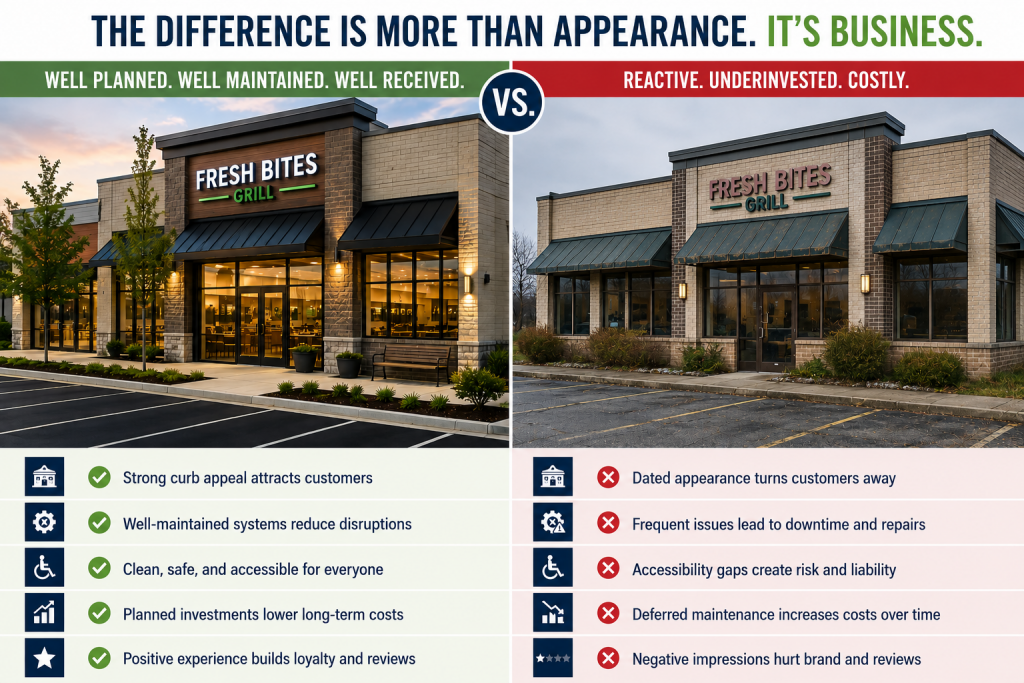
For many retail chains and restaurant operators, profit margins are measured in pennies on the dollar.
Competition is fierce. Labor costs continue to rise. Supply chains remain unpredictable. Customer expectations have never been higher.
In that environment, every operational decision matters.
Yet many organizations continue to manage one of their most visible and valuable assets—their facilities—with a largely reactive approach.
A leaking roof becomes a work order.
A failing HVAC unit becomes an emergency repair.
A deteriorating parking lot gets patched.
An accessibility issue is addressed only after a complaint.
A location slowly loses its visual appeal until customers begin noticing what management has stopped seeing.
The result is often a cycle of escalating costs, operational disruptions, and declining customer experience.
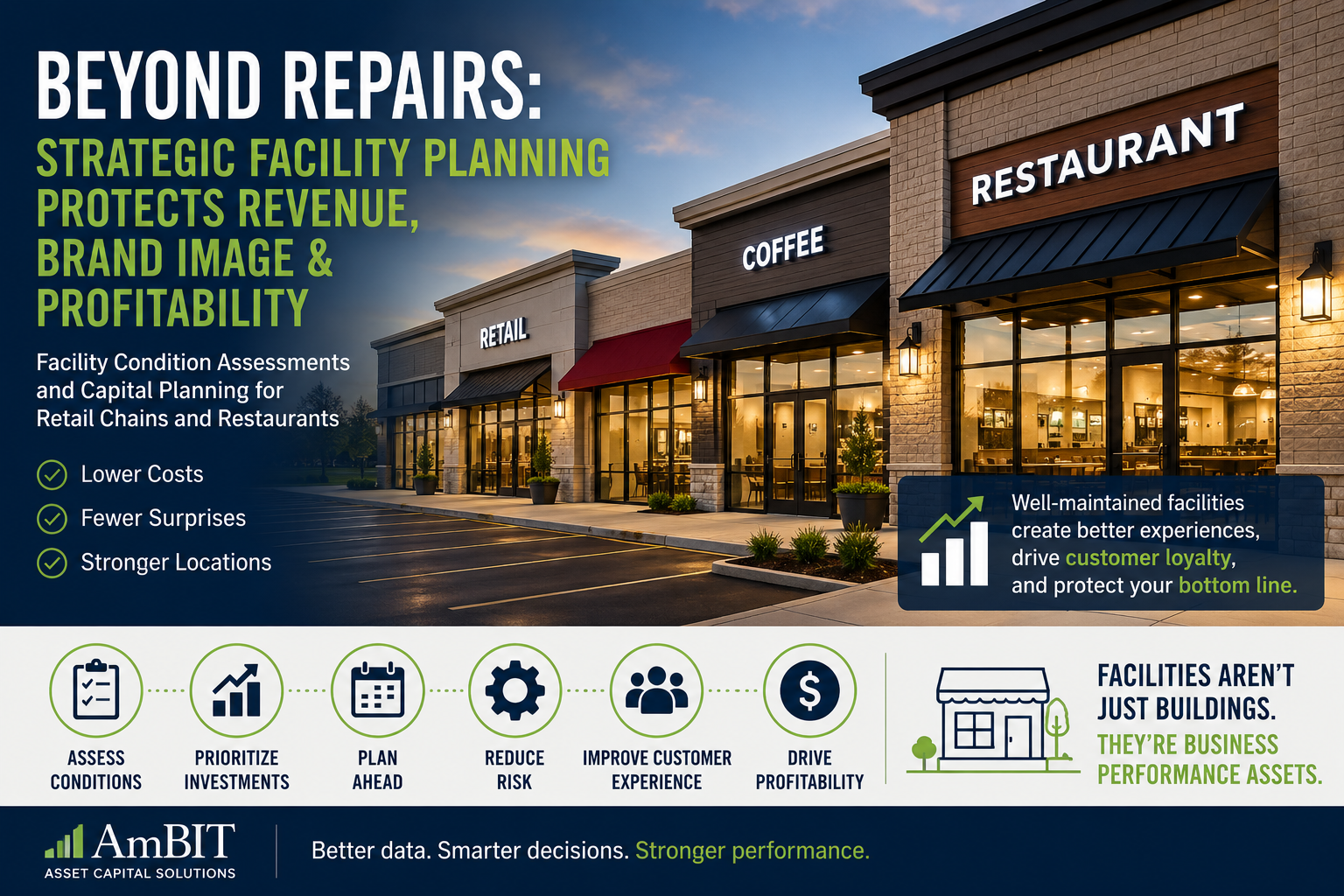
Forward-thinking organizations are discovering that Facility Condition Assessments (FCAs), capital planning, and facility consulting are not merely maintenance tools. They are strategic business tools that help protect profitability, strengthen brand image, improve customer experience, and reduce long-term operating costs.
The question is no longer whether businesses can afford to invest in facility planning.
The question is whether they can afford not to.
Your Building Is Part of Your Brand
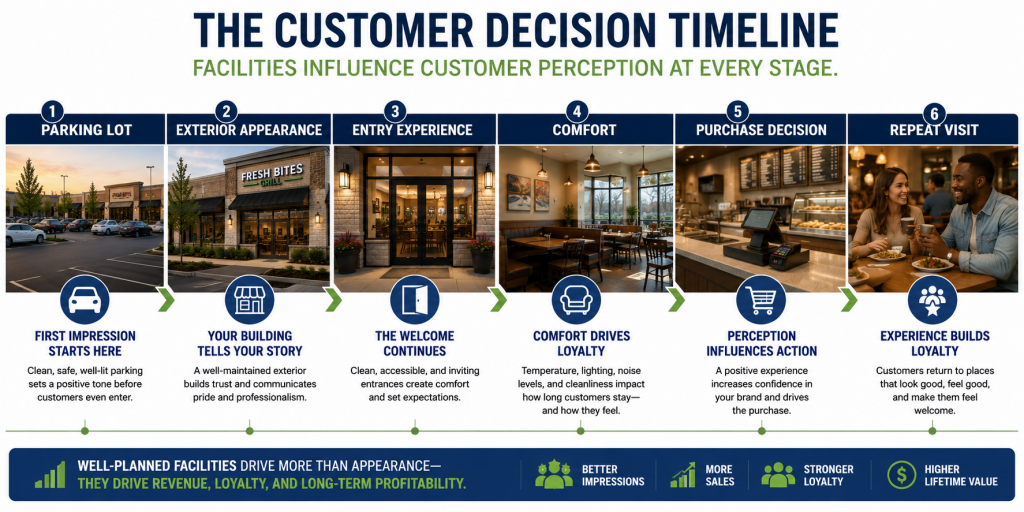
Customers form opinions long before they interact with an employee.
They notice:
- Parking lot condition
- Exterior lighting
- Landscaping
- Sidewalks
- Building appearance
- Signage
- Cleanliness
- Interior finishes
- Restroom condition
- Comfort levels
These observations occur within seconds.
Whether consciously or subconsciously, customers associate the condition of a facility with the quality of the products and services provided within it.
A deteriorating facility communicates:
- Lack of attention to detail
- Deferred investment
- Aging operations
- Reduced professionalism
Conversely, a clean, attractive, and well-maintained location communicates:
- Pride
- Reliability
- Professionalism
- Quality
- Customer focus
For customer-facing businesses, facility condition is a direct extension of the brand.
The Hidden Cost of Reactive Maintenance
Most facility failures do not occur suddenly.
They develop gradually over time.
Unfortunately, many organizations operate under a break-fix model that waits for problems to become emergencies before addressing them.
Examples include:
- HVAC failures during peak summer conditions
- Refrigeration equipment breakdowns
- Roof leaks during storms
- Plumbing failures
- Lighting outages
- Accessibility complaints
- Parking lot deterioration
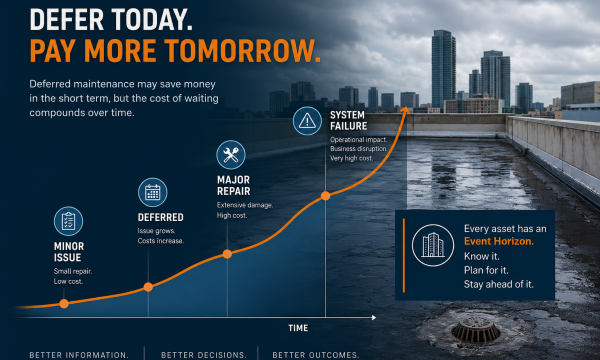
While postponing repairs may appear to save money in the short term, reactive maintenance often becomes the most expensive approach over time.
Reactive maintenance typically results in:
- Emergency contractor rates
- Overtime labor
- Operational disruption
- Temporary equipment rentals
- Customer inconvenience
- Lost sales opportunities
- Shortened equipment life
The emergency repair itself is often only a fraction of the total cost.
Facilities Directly Affect Revenue
Retail and restaurant operators frequently evaluate:
- Labor costs
- Food costs
- Inventory shrinkage
- Marketing expenditures
- Sales performance
But facility condition is rarely measured against revenue impact.
Consider the potential effects of:
Inadequate HVAC Performance
Customers spend less time in uncomfortable environments.
Employees become less productive.
Equipment may operate inefficiently.
Poor Lighting
Stores appear less inviting.
Merchandise presentation suffers.
Perceptions of safety may decline.
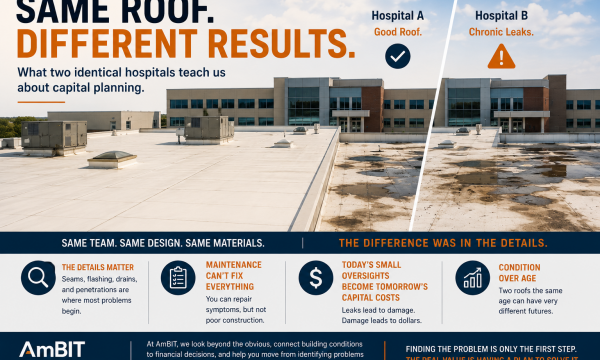
Roof Leaks
Customers notice.
Employees notice.
Health and safety risks increase.
Brand image suffers.
Parking Lot Deterioration
Customers form negative impressions before entering the building.
Liability exposure increases.
Accessibility becomes more challenging.
Facilities influence customer behavior more than many organizations realize.
Accessibility Is More Than Compliance
Many businesses think about accessibility only when responding to complaints or legal concerns.
That perspective misses a significant opportunity.
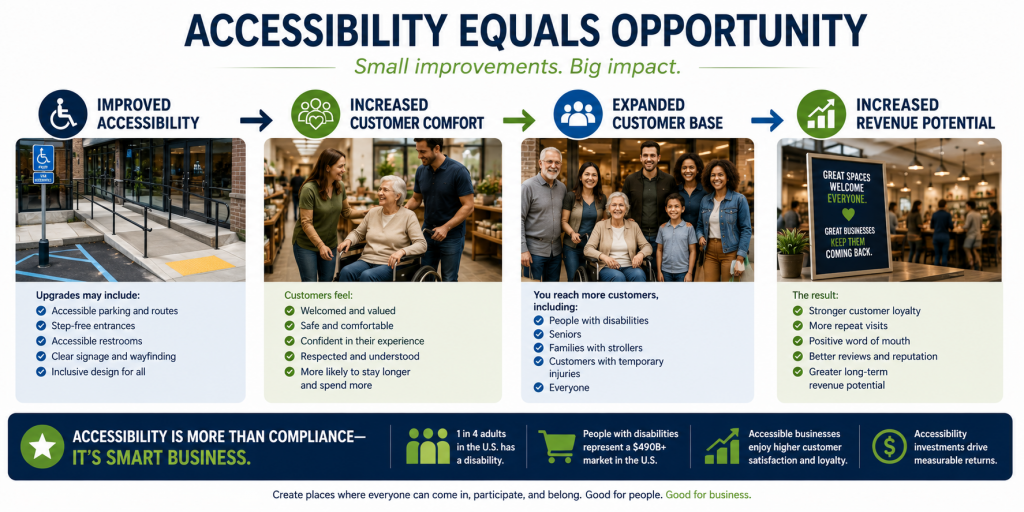
Accessibility improvements can expand the customer base and improve customer experience for everyone.
Common issues include:
- Accessible parking deficiencies
- Sidewalk accessibility barriers
- Entrance challenges
- Restroom accessibility concerns
- Signage deficiencies
- Counter height issues
- Seating accessibility limitations
An ADA-focused facility assessment can identify deficiencies before they become liabilities.
More importantly, it helps create a welcoming environment for all customers.
Accessibility is not merely a compliance issue.
It is a customer experience issue.
Even Tenants Benefit from Facility Assessments
Many chain operators lease their locations and assume facility condition assessments provide little value because they do not own the building.
In reality, leased facilities often benefit significantly from facility evaluations.
Assessments can help operators:
- Identify landlord responsibilities
- Document facility deficiencies
- Support lease negotiations
- Validate maintenance obligations
- Improve budgeting accuracy
- Prioritize reinvestment decisions
Understanding building condition provides valuable leverage and insight regardless of ownership structure.
The Value of a Portfolio-Wide Perspective
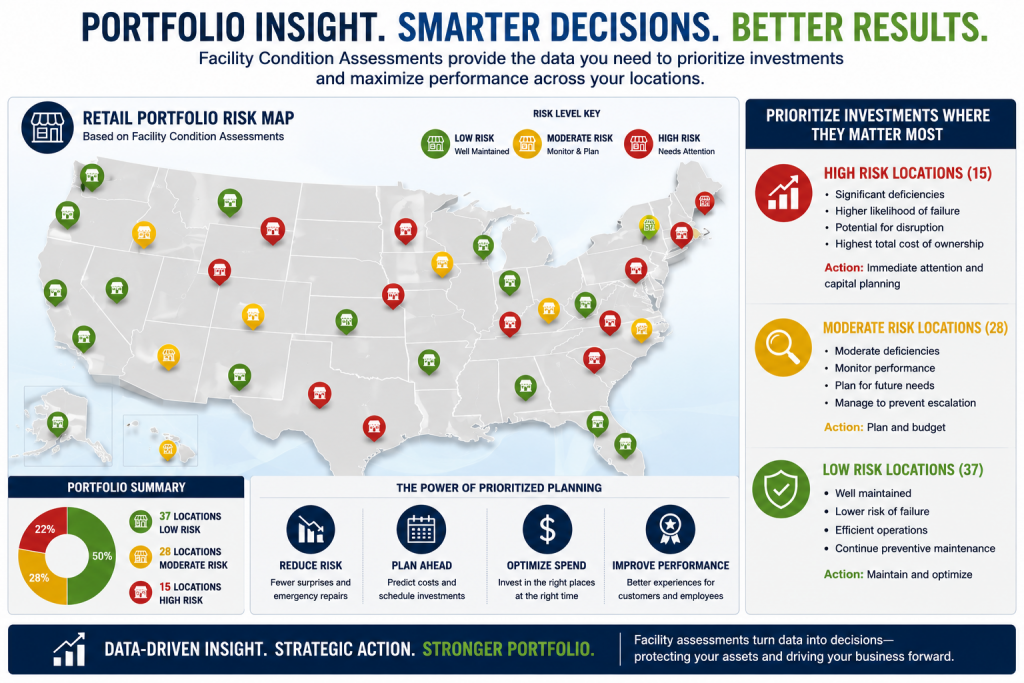
One of the greatest advantages of modern facility assessments is the ability to evaluate multiple locations consistently.
Instead of viewing facilities individually, organizations can analyze entire portfolios.
A portfolio approach allows leadership to identify:
- High-risk locations
- Recurring deficiencies
- Regional trends
- Capital investment priorities
- Brand consistency issues
For chains operating dozens or hundreds of locations, this creates a powerful decision-making tool.
Planned Capital Spending Reduces Surprises
One of the greatest frustrations for retail operators is unexpected spending.
A failed rooftop unit.
An emergency roof replacement.
Parking lot reconstruction.
Significant plumbing repairs.
Without planning, these events become budget disruptions.
Facility Condition Assessments help organizations forecast:
- Remaining useful life
- Replacement timing
- Expected capital costs
- Risk levels
This allows leadership to move from surprise spending to strategic spending.
The result is greater budget stability and improved financial predictability.
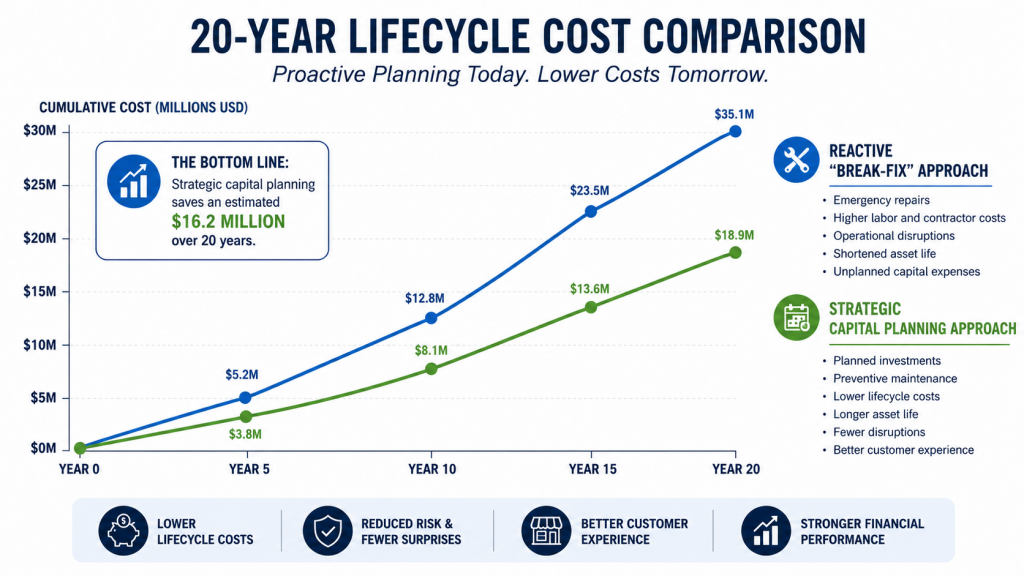
The Financial Advantage of Proactive Planning
Organizations that combine:
- Facility Condition Assessments
- Capital Planning
- Preventive Maintenance
- Portfolio Management
often experience:
- Lower lifecycle costs
- Reduced emergency spending
- Longer asset life
- Improved reliability
- Better customer experiences
- More consistent brand presentation
Most importantly, they gain greater control over their facilities and their budgets.
Facilities Are Not Overhead—They Are Business Assets
Retail stores and restaurants succeed by creating positive customer experiences consistently.
Facilities play a critical role in that process.
Customers notice building condition.
Employees experience building performance every day.
Operational disruptions affect revenue.
Deferred maintenance impacts profitability.
A well-maintained facility is not simply a cost center.
It is an operational asset that supports sales, customer retention, employee productivity, and brand reputation.
Organizations that recognize this reality position themselves for stronger long-term performance.
Those that leave facility management to chance often discover that the most expensive repairs are the ones they thought they were avoiding.
How AmBIT Helps
AmBIT Asset Capital Solutions helps retail chains, restaurant operators, and multi-site organizations make smarter facility decisions through:
- Facility Condition Assessments
- ADA Compliance Evaluations
- Asset Inventory Development
- Capital Planning
- Preventive Maintenance Planning
- Portfolio Risk Assessments
- Facility Appearance and Customer Experience Evaluations
Our flexible approach allows organizations to focus on the specific facility challenges most critical to their business objectives.
Whether the goal is reducing lifecycle costs, improving customer experience, strengthening accessibility, or creating a long-term capital strategy, AmBIT provides the data and expertise needed to move from reactive facility management to proactive facility stewardship.

Written by
AmBIT Author