Facility Condition in Public-Facing Properties: Your Brand on Display
Facility condition in public-facing properties is more than an operational concern — it is a direct and visible reflection of your organization’s brand.
Executive Summary
How Facility Condition Affects Public-Facing Properties
For organizations with public-facing facilities, the condition of their buildings is more than an operational concern—it is a direct reflection of their brand.
Whether it’s a prospective student touring a campus, a family evaluating a senior living community, or a customer walking into a retail location, the physical environment communicates something immediate and lasting:
Is this organization professional, stable, and well-managed—or is it struggling behind the scenes?
At the same time, building owners must balance this outward image with the internal realities of maintaining complex systems, controlling costs, and avoiding disruptions.
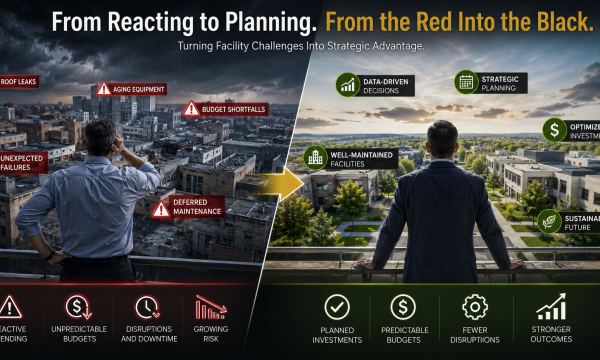
Too often, these priorities are addressed reactively—leading to:
- Visible deterioration
- Unexpected failures
- Budget volatility
- Missed opportunities to strengthen brand perception
A proactive, data-driven approach, especially for public-facing properties, where facility condition is visible to every visitor.
AmBIT helps building owners achieve this balance by providing objective Facility Condition Assessments (FCA’s), strategic capital planning, and ongoing professional guidance—ensuring facilities are not only operating efficiently, but also projecting the image necessary to support long-term success.
Your Facilities Are Your Brand
For public-facing organizations, facilities are part of the customer experience.
Private Schools & Colleges
- Campus tours are often the deciding factor for enrollment
- Outdated or poorly maintained buildings raise concerns about institutional stability
Senior Living Communities
- Families look for comfort, cleanliness, and safety
- Deferred maintenance can undermine trust at a critical decision point
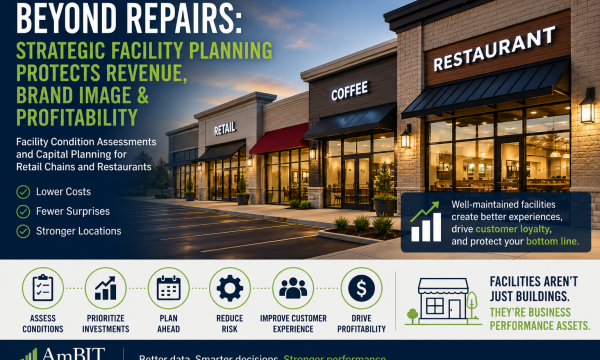
Retail & Commercial Properties
- First impressions influence customer behavior
- Poor conditions can directly impact revenue
In each case, facilities are not just infrastructure—they are a visible extension of the organization’s reputation.
The Dual Challenge: Performance and Perception
Building owners must simultaneously manage:
1. Operational Performance
- HVAC systems, roofing, electrical infrastructure
- Reliability and efficiency
- Lifecycle management
2. Visual and Experiential Quality
- Interior finishes
- Exterior appearance
- Overall sense of care and professionalism
These priorities are often addressed separately—when in reality, they are deeply connected.
For example:
- A failing HVAC system may not be visible—but its impact on comfort is immediate
- A deteriorating façade may not affect operations—but it shapes perception instantly
A successful strategy must address both.
The Risk of Reactive Management
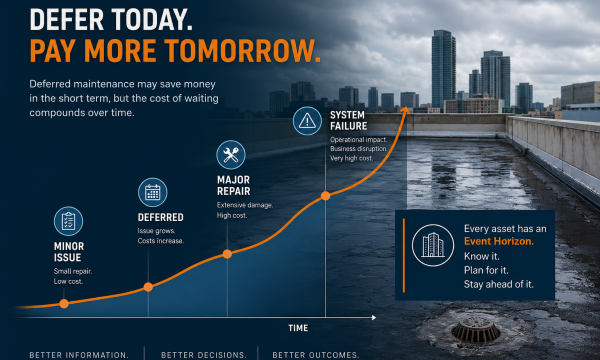
Without a structured plan, facilities are often managed reactively:
- Repairs are made when issues become urgent
- Capital projects are driven by immediate need rather than strategy
- Cosmetic improvements are prioritized without understanding underlying system risks
This leads to:
- Inefficient spending
- Unexpected disruptions
- Inconsistent facility quality
And ultimately:
A disconnect between how the organization wants to be perceived and what its facilities communicate.
The Role of Facility Condition Assessments (FCA’s)
A Facility Condition Assessment is the foundation of a proactive strategy.
AmBIT’s FCA process provides:
Comprehensive System Inventory
- Detailed identification of building systems and components
- Organized using industry-standard frameworks (e.g., Uniformat II)
Condition Evaluation
- Real-world assessment of system performance
- Identification of deficiencies—both visible and hidden
Remaining Useful Life (RUL) Analysis
- Adjusted based on observed condition—not just age
- Reflects actual expected performance
Cost Forecasting
- Realistic repair and replacement cost estimates
- Based on current market conditions and experience
Why Professional Expertise Matters
Not all FCA’s deliver meaningful results.
Low-cost providers often rely on:
- Inexperienced assessors
- Checklist-based inspections
- Generic assumptions
This leads to:
- Inaccurate data
- Misaligned priorities
- Limited usefulness in decision-making
AmBIT’s assessments are performed by experienced facilities professionals who bring:
- Deep understanding of building systems
- Real-world knowledge of failure modes
- Practical insight into cost and constructability
This ensures that the data is not only accurate—but actionable.
From Assessment to Strategy
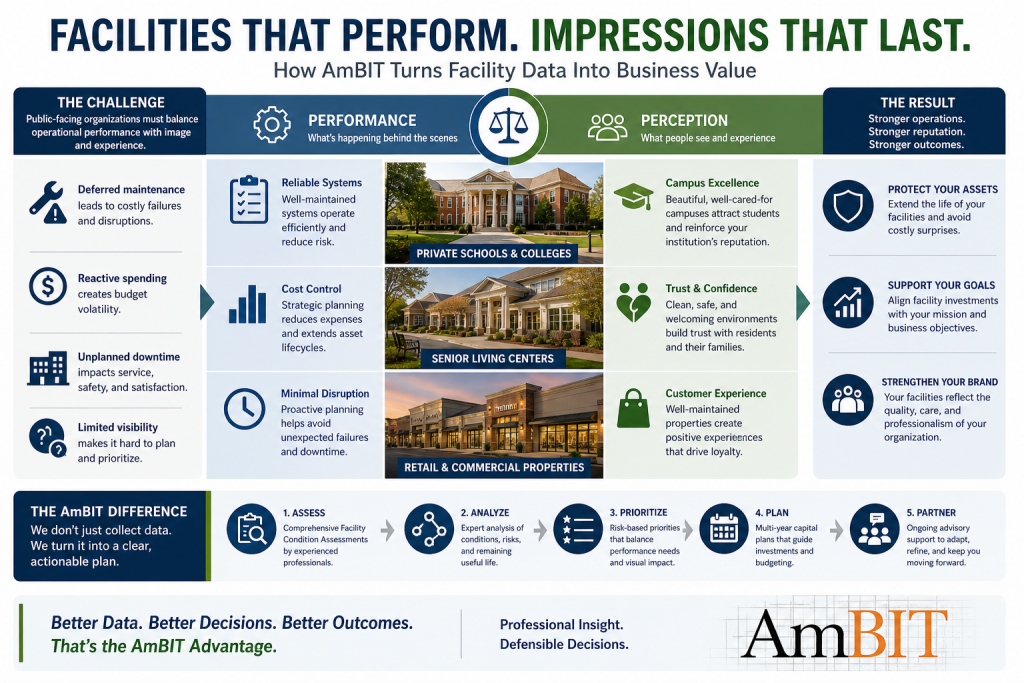
An FCA is only the first step.
AmBIT works with clients to translate assessment data into a clear, structured plan.
1. Prioritization of Needs
Using a risk-based framework:
- What must be addressed immediately?
- What can be planned over time?
- What impacts operations vs. perception?
This allows organizations to allocate resources effectively.
2. Capital Planning
Development of a multi-year capital plan that:
- Aligns with system lifecycles
- Smooths budget requirements
- Coordinates related projects
This transforms a list of needs into a defensible strategy.
3. Balancing Performance and Image
One of the most valuable aspects of AmBIT’s approach is helping clients balance:
- Behind-the-scenes infrastructure needs
- Front-facing improvements that shape perception
This ensures that investments support both:
- Operational reliability
- Brand and user experience
4. Ongoing Advisory Support
Facilities are dynamic—conditions change, priorities shift.
AmBIT provides ongoing support to:
- Update plans as needed
- Adjust priorities based on new information
- Support leadership discussions with clear, objective data
The Business Case for Proactive Facility Management
Organizations that take a structured approach to facility management realize measurable benefits:
Operational Benefits
- Reduced emergency repairs
- Improved system efficiency
- Fewer disruptions
Financial Benefits
- Predictable capital spending
- Lower long-term costs
- Better alignment with funding strategies
Brand & Experience Benefits
- Stronger first impressions
- Increased confidence among stakeholders
- Enhanced competitiveness
The AmBIT Advantage
AmBIT’s approach is built on three core principles:
1. Objective Data
Clear, accurate understanding of facility conditions.
2. Professional Insight
Interpretation by experienced facilities professionals—not data collectors.
3. Actionable Strategy
Capital plans that guide decision-making and support long-term success.
Conclusion: What Are Your Facilities Saying About You?
Every day, your buildings are communicating something to the people who interact with them.
The question is:
Are they reinforcing your brand—or undermining it?
With the right data, expertise, and strategy, facilities can become a strength—not a liability.
Call to Action
If your organization is responsible for public-facing facilities, the first step toward control is clarity.
AmBIT helps building owners understand their facilities, prioritize their needs, and build a plan that supports both operational performance and public perception.

Written by
AmBIT Author